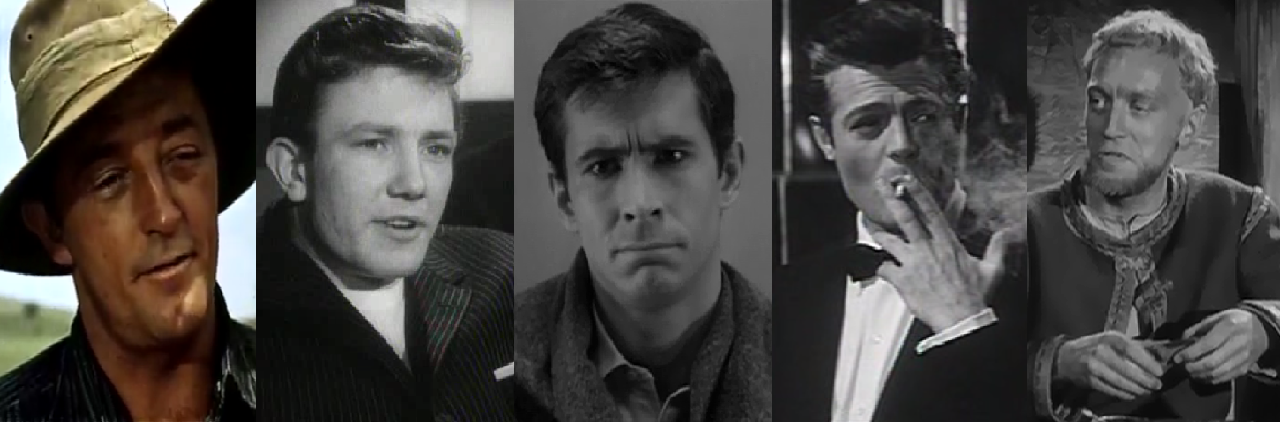
Marcello Mastroianni did not receive an Oscar nomination for portraying Marcello Rubini in La Dolce Vita.
La Dolce Vita is an interesting even if overlong film that is an episodic story of the various moment in the life of a tabloid journalist.
La Dolce Vita is very Federico Fellini's picture from beginning to end. It is a director's picture the whole way through controlling the film with his remarkable imagery, and the actors are very much in service of their director. The characters are there very much to suit the points of the director's scene more than they are to create their own incredible characterization. This true just about down the line for the most part, it is even true to some degree for the leading man of Marcello Mastroianni, although he is allowed developments of sorts even though they are relatively limited. There is actually plenty of time for him still as this is a long film, but Marcello's story is hardly the only focus of the film.
Mastroianni acts as our guide through the various journey's into the very particular culture of the wealthy in Rome. Mastroianni has a very particular role in so many scenes which is being a watcher rather than the actor in many scenes. After all Marcello is a journalist in the film and his point is to observe for his articles not to be the person who the articles are about. As the observer Mastroianni is effective at being one. He brings attention to himself to only the right amount. Marcello is there always, he might not be the most flamboyant individual in many scenes, but he is always interesting to watch and Mastroianni effectively brings us into his observer status.
Mastroianni is his usual charming self, even though it is in a way purposefully muted here. Unlike in say Dark Eyes where he was all about romantic gestures, Mastroianni portrays Marcello's various romantic encounters with women in a very downplayed way. Marcello is constantly having affairs with women, but even when he approaches them with proclamations of the love his method is something that is almost depressed at times. This actually works terrifically for his character though who in terms of his romantic associations is a little bit like Albert Finney's performance from this year.
The most important part of Marcello's life as a journalist is how little pleasure that Mastroianni shows in all that Marcello does whether it is being in a party or wooing one of his romantic conquests. It is simply something he just does and goes along with. Everything that comes with it Mastroianni shows that Marcello only takes it in stride. It does not matter what it is even being attacked over getting involved with one of the many women he gets involved in. Mastroianni shows a very strong hesitation and exasperated in Marcello what he does. This is not from any pain that he has in the past really, but rather Mastroianni effectively shows that it simply comes from his whole sort of life.
Mastroianni carries his tired look at his life well most of the film without overdoing it to the point in which it becomes tiresome, he rather shows well the type of man that can come from living in the certain sort of decadence that Marcello stays in. Marcello is not always tired though and there are some very important moments in Mastroianni performance that are quite notable. One set of scenes in particular are when his father comes to visit him, and Mastroianni is very good in showing a very different side to Marcello. Mastroianni is very quiet in these scenes but moving as he portrays a tenderness in Marcello that hints at perhaps the possibilities of a different life for him, as Mastroianni makes it clear Marcello honestly does care about his father.
There are two other important scenes for Marcello's character outside of his normal spectrum. One consists of a fairly brutal fight with his clinging girlfriend where Marcello fights against moving away from his current life. Mastroianni is louder here than most of his other scenes as he brings to life the anger in him of not having any idea what he really wants, only that what he has really is not it. The other important scene for him comes when a tragedy occurs involving one of Marcello's friend. In this scene we see him lose his tired exasperation finally and there almost seems to be clarity in him over what has occurred. Mastroianni is almost silent here but he is very powerful in showing how deeply affected Marcello over what has happened.
Mastroianni performance ends in a final long scene where years later after the other action Marcello seems to have final done something. What that something is the is only going further into his the life of decadence, and Mastroianni is amazing in this final scene in showing just how pathetic Marcello finally has become. Before where he seemed tired here Marcello seems ready collapse in Mastroianni's depiction. There is not really even the slightest joy in him now which seemed to occasionally appear before. There is almost nothing left in Marcello now but the decadence which he tries to go further and further into, as Mastroianni portrays a drive to get something out of it, but there is nothing there. It is an incredible end to this effective work from Mastroianni which moves in a wonderful harmony with the film.