eXTReMe Tracker

Alternate Best Supporting Actor 2005: Ed Harris in A History of Violence

Ed Harris did not receive an Oscar nomination for portraying Carl Fogarty in A History of Violence.Ed Harris portrays the Philadelphia gangster who comes looking for diner owner Tom Stall who recently killed two men trying to rob his diner..

Best Supporting Actor 2011: Nick Nolte in Warrior

Nick Nolte received his third Oscar nomination for portraying Paddy Conlon in Warrior.Warrior details a winner take all mixed martial art tournament whose two main combatants are estranged brothers (Tom Hardy, Joel Edgerton) fighting for their own difficult reasons.

Alternate Best Actor 2011

And the Nominees Were Not:Ryan Gosling in DriveRobert Wieckiewicz in In DarknessMichael Fassbender in ShameMichael Shannon in Take ShelterBrendan Gleeson in The Guard..

Tuesday, August 14, 2012

Alternate Best Actor 1974: Gene Wilder in Young Frankenstein

Gene Wilder did not receive an Oscar nomination for portraying Frederick Frankenstein in Young Frankenstein, although he did get one for writing it.

Young Frankenstein is an enjoyable comedy film about a descendant of Victor Frankenstein trying to make his own monster. Although to be fair like most Mel Brooks comedies it does mix in a few groans with the laughs due to the fact he constantly is going for laughs. I will say one of the best parts of this film though is the recreation of the art direction and cinematography found in the original Frankenstein film. 

Gene Wilder portrays the descendant of Victor Frankenstein who at first wishes to not be associated with his ancestor in any way even insisting that his last name is pronounced differently. Of course after inheriting the old castle, and finding his grandfather's old notes he soon decides to make his own monster by reanimating the dead. Wilder is an actor who particularly suits the role of the Frankenstein, the biggest reason I would say why is the propensity Frankenstein have to yell wildly. If there is one actor who knows how to yell so it does not seem like overacting but in fact comic brilliance it is Gene Wilder. Wilder knows how to yell in just a way that it is a full body experience of an energetic emotion of some sort. Whether it is crying in terror over his creature, or glee over his success, or anger over his failure. Wilder is able to be as equally humorous as he is intense in screams. Wilder never overacts because he always absolutely believes in his loud cries.

Wilder always has a certain conviction in the role that works in an interesting trick he manages to pull with his performance. Wilder in a way does portray his role seriously in that he does not really act like he is in a parody of Frankenstein. This is not to say Wilder plays it straight though, after all he does play the part like a maniac. Wilder though is both a Frankenstein who shows passion in his experiments as well as with ease goes for as many laughs as possible. Now I am not trying to say that Wilder gives a dramatically compelling performance, as that is not the intention of the film, which is an extremely comic style comedy this is Mel Brooks after all not Woody Allen. Wilder though is able to really bring the comedy though through by being as devoted to possibly in bringing the insanity of his character alive in his insane performance.

Wilder simply knows how to effectively give a comedic performance without falling into the excessive overacting of some performances in comedies.Wilder with ease is entertaining in every one of his scenes with his expert timing. Wilder goes on the edge with every moment with his craziness, and always manages to succeed in bringing the laughs with his performance.Wilder punctuates well every moment of his performance to simply gives an extremely enjoyable performance. It might not quite have as great or as wide of an effect as his earlier work in Willy Wonka and the Chocolate Factory, but nevertheless he succeeds well in creating a very funny performance which was very much the main goal of his work here.

Sunday, August 12, 2012

Alternate Best Actor 1974: Charles Bronson in Death Wish

Charles Bronson did not receive an Oscar nomination for portraying Paul Kersey in Death Wish.

Death Wish is a somewhat effective film about a man who becomes a vigilante after his wife is brutally murdered, and his daughter is raped by street thugs.

It is interesting that apparently Sidney Lumet was going adapt the novel Death Wish with Jack Lemmon in the lead. I must say I think Lemmon possibly could have given a great performance and he certainly would have been much more of an everyman since vigilante is not something that quickly comes to your mind with Lemmon. Charles Bronson on the other hand it might be one of the first things you might think of. I will admit that is probably helped greatly by the film series of Death Wish, but Bronson even before this film was usually an on screen tough guy.

Due to Bronson's previous screen credits his eventually becoming a vigilante does not seem like much of stretch, in fact Bronson seeming the happy family man seems more unnatural than being the killer. This is not against Bronson's performance as he believable enough in his family scenes. He has a strong enough warmth and what not, but rather it has to do with Bronson's type which always comes across as tough guy, not a former conscientious objector. Bronson is really an actor who showed mostly this very specific range in his performances.

This is not say that Bronson might or might not have been able to tackle a more complex form of this character, but it seems that the director really cast him more on his reputation as a badass than an actor. In fact there are many scenes where the direction in the film takes an approach for us to feel what Paul is going through by the the film rather than specifically by Bronson's performance. Two scenes in particular express this one being Paul's grief over his wife it cuts away from Bronson so fast you barely even know he is going through his heartbreak.

That first scene I write of more of shows all the aftermath such as her funeral, and we only see a small glimpse of Paul's reaction. Bronson is fine in his quick expression of Paul's disbelief and sadness but it is too short to be particularly powerful. His other scene is when Paul goes home after killing a man. Again we breifly get a glance at Bronson's expression but only for a second as he quickly goes and vomit. The film shows us the emotional consequence through the noise far more than with Bronson's performance, although again the brief moment is handled well enough by Bronson.

Bronson more fully comes into his own in his scenes what were the reasons why he was probably cast. The scenes being where Paul kills every mugger he happens to run into. Bronson in these scenes shows his particular skills as a performer well in these fast but intense moments. Bronson make Paul an incisive killer and he has a strong control over the moments. He makes Paul's killing something that is very much to the point. He shows that Paul does not intend to play around only kill those who he believes deserve to die for their criminal actions.

Of course the whole vigilantism aspect seems like a bit of a missed opportunity since being Charles Bronson there is not a learning curve. He instantly becomes a completely confidant killer, and is instantly imposing. He also instantly shows Paul to think himself quite cool in a way from the idolization the mysterious vigilante receives from some people. An actor like Jack Lemmon might have been able to bring about a slower, but more powerful of an average man transforming into someone far less ordinary killer. With Bronson it is less of a transition and more of just a realization.

I should say I never do feel that Bronson is bad in the role. He is consistently confidant, and when required he shows the appropriate emotions. My only problem comes in that the character of Paul Kersey could have been so much more, and could have been a fascinating delve into the psyche behind a vigilante. Instead Bronson settles with just making Paul into a watchable action hero who went on to appear in a total of four more films after this one.  I really could give Bronson less but really this is an entirely effective performance that does use the strengths of Bronson's onscreen persona well, even though I can't help but wonder if Paul could have lead to a truly amazing performance in another set of hands.

Saturday, August 11, 2012

Alternate Best Actor 1974: Peter Falk in A Woman Under the Influence

Peter Falk did not receive an Oscar nomination for portraying Nick Longhetti in A Woman Under the Influence.

A Woman Under the Influence is a film about the madness of a mother Mabel (Gena Rowlands) that causes difficulty in her marriage with her construction worker husband Nick. This is a very effective film, but it certainly is hard to say it is all that enjoyable to watch.

This film received some recognition for its direction by John Cassavetes, but what the film was most recognized for was the lead performance by Gena Rowlands as the mad housewife Mabel. I should say that this very deserving recognition that Rowlands received. Her performance is indeed an amazing achievement in that she stays on the very edge for her entire performance yet she never falls off giving an incredibly memorable portrayal of her strange character. It is easy to see how Falk could have been overshadowed by her performance.

Peter Falk's performance here is very reactive actually. Nick appears to be the normal one, and much of his screen time is spent dealing with his wife's erratic behavior. There are a few solo scenes early on in his performance but these moments are fairly standard with Nick just hanging out with his co-workers wishing to get home to spend time with his wife. Of course Falk does portray these well enough making it clear that Nick is concerned about his wife, and does love her, although at the same time shows that at least for the moment is not overly frustrated by the idea of not being able to see her.

Falk is good in his reactive moments though in his scenes with Rowlands as Mabel. The moments are of course tense as Mabel changes moods so easily and can easily  become very excited from the smallest moments. Falk is good in showing Nick's method of dealing with his wife. Falk portrays the role rather naturally in that he is able to show that Nick's understands his wife only to a degree. He good in being quiet when Nick does just try to talk to her in a calm fashion to bring her down from some of her more insane moods, but at the same time Falk is effective in the way he brings about the quick angry moments where he just tries to shut down his wife's behavior quickly.

Falk pretty much stay consistent with his performance and does a fine job bringing to life the situation of the film. He in a way grounds the film by having his more down to earth portrayal reflect off her off the wall one in a strange harmony. The best part of Falk's performance is his realization of Nick's motivations involving dealing with his wife. Falk does make it clear that Nick does love Mabel, as he always does try be as gentle with her as possible at first, and his later pain over having her committed are certainly brought to life by Falk powerfully. Falk shows that really in his anger that does come at times toward Mabel is not hating her, but brought upon by his inability to fully understand the odd behavior of his wife.

Falk's whole performance is not just reacting to his wife though as after sends her away Nick is forced to take care of the children himself, and has his own severe problems in this regard. Falk is very effective in these scenes as Nick's fails to relate to his children. He shows that Nick wants desperately to treat them in a fatherly fashion, but the attempts at warmth and wisdom always are shown to be forced by Falk. Falk is able to convey the fact that Nick is simply out of his element and is trying something he really is not used to. When Nick gives his children beer Falk portrays it not as purposeful child negligence, but rather as just a lack of awareness in Nick to the way of fulfilling his role as a father. 

This is a strong performance by Peter Falk even if his particular role in the film is very distinct. Even though he is the lead, and his solo scenes prove that to be the case, his performance for the most part very much is supporting Rowlands's tremendous performance. I am not really saying anything against Falk that Rowlands is the performance you remember after watching the film, even though that is the case. His performance is not nearly as striking and powerful, but it really did not have to be. Falk should be given his credit though in that he creates a realistic portrait of this man's difficult relationship to his very hard to understand wife, and successfully compliments Gena Rowlands's magnificent performance throughout the film. 

Friday, August 10, 2012

Alternate Best Actor 1974: Gene Hackman in The Conversation

Gene Hackman did not receive an Oscar nomination for portraying Harry Caul in The Conversation.

The Conversation is an excellent film about a surveillance expert who is paranoid over his most recent recording.

I must say Gene Hackman's lack of a nomination is a bit surprising in retrospect. As he was nominated in the other awards of the year as well as successfully won the National Board of Review. Also more importantly to the Oscars themselves was that the Conversation was nominated for Best Picture. Although Dustin Hoffman, Al Pacino, and Jack Nicholson all followed along with their pictures to nominations, but oddly enough Hackman was pushed to the side for Albert Finney in Murder on the Orient Express, which is especially strange since The Conversation depends so greatly on Gene Hackman's performance.

Gene Hackman shows a different side to his considerable talent than in his far more flamboyant Oscar winning turn as detective Popeye Doyle. In his performance as Harry Caul Hackman gives a very tightly wound performance. Aided by a clear rain coat, those glasses, and that mustache Hackman creates a very unique character in Harry Caul. His manner is very distinct here as he portrays the very withdrawn Caul. Hackman who succeeds so well in overpowering characters who constantly are seeking to make themselves known, is equally apt at being this man who wants to be invisible at times.

Hackman is outstanding in the opening scenes as we see Caul move through his task of tracing to people who are having the titular conversation. Here we see Caul very much in his world as he goes about being hidden and watches his plan unfold. Hackman shows that Caul proceeds in a very workmanlike fashion as he goes through the process of finding the information that is required for him. Hackman portrays distinctly here a certain lack of investment in what exactly he is dealing with at the moment. Caul does not care about what his task at hand really means, but is simply being a professional in going through what needs to be done.

After this initial scene though we see Harry Caul go home, and here we see that Caul's attempt at being unnoticed is not something he does for his work, but is in fact his way of life. Hackman's body language here is brilliantly used as he portrays Caul's every movement as one of caution. The way he walks, the way he even unlocks and opens a door, Hackman always shows a certain uncertainy within Caul that causes him to act in his unique and rather peculiar fashion. One big part Hackman always brings across is that Caul never seems to be able to relax. Even when he goes to visit his girlfriend Hackman shows the same distance, and lack of comfort.

Hackman is brilliant in his portrayal of the paranoia that constantly is pressing on Caul's mind. What is so effective about Hackman's performance is how quiet he is in conveying the paranoid Caul. There is not single scene where he burst out in emotions over his fears once. Instead Hackman is far more convincing in portraying this man's mindset by never making this as any sort of obvious insanity, but rather a constant underlying pressure upon Caul that forces him to act in his particular way. Hackman shows that it is not that Caul wants to be paranoid, but as a surveillance expert he can't really not be paranoid.

Hackman portrayal of Caul's behavior is something truly striking because he shows Caul effectively keeps his distance at all times. Whenever he talks to anyone even colleague or his girlfriend on casual terms Hackman's is terrific in bringing to life always a disconnect between Caul and the people around. The most interesting part of Hackman's performance in this regard is that there is a certain desperation behind his apparent coldness, the desperation being that he really does not want to be this way but he can't help it. Hackman shows that Caul does want warmer relationships, but this only comes out at pivotal moments.

Hackman does not make the moments where Caul lets his guard down as being worn down in the least, but rather as Caul is not nearly as cold as he seems to think he needs to be they are at times some of the natural moments for the Caul the person. In particular one scene where Caul is pushed to say how he did one very difficult assignment. Hackman perfectly downplays Caul's usual distance here as he shows Caul actively show a little more warmth as he boasts a little and smiles just slightly at his achievement. Caul quickly finds that his guard being down has left him open to an attack on his privacy, and Hackman's Caul's anger being both toward the man who pulled the prank on him, but as well at himself for not being protective enough.

Gene Hackman's performance as great as it is does not only focus on just the paranoia, but as well as a prevailing guilt in Harry after one of his jobs lead to murder, and he believes that this new one may lead to the same. Hackman in this performance knows how to make the slightest absolutely compelling as he repeatedly goes over the recording over and over again trying to figure out what exactly it means. Hackman brings us into Caul's mindset as he carefully listens over and over again to every facet of the recording. Although Caul claims that he only wants to make the recording clear for his client, Hackman conveys in his intense pondering over the conversation that Caul cannot separate himself from what might be the results of the recording.

Hackman is simple fascinating as he brings to life the guilt that Caul cannot shake and follows him through. Hackman shows that as cold and distant Caul wants to be he is fact a man who becomes far too deeply invested considering what his work entails. It is something truly outstanding as we follow Caul through finding out exactly what the conversation did mean after all. Hackman brings us right into the horror of knowing the truth as Caul sees the results of work. It is an astonishing scene as Hackman's portrays the sheer terror, and pain he goes through as all of his fears come true. An incredible scene to begin with but Hackman makes it as powerful as possible through his flawless portrayal of Caul's haunting reaction.

This is simply an amazing performance by Gene Hackman that may be his personal best, and considering his filmography that is really saying something. He never wastes a single moment in his performance utilizing every second of his performance to realize this very unique characterization. Hackman makes his Harry Caul into a truly fascinating man, very peculiar, yet there is not a hint of acting in this performance. This is an incredible achievement by Gene Hackman as he simply becomes Harry Caul, who he makes into a unforgettable and always fascinating character.

Wednesday, August 8, 2012

Alternate Best Actor 1974

And the Nominees Were Not:

Peter Falk in A Woman Under The Influence

Charles Bronson in Death Wish

Gene Hackman in The Conversation

Walter Matthau in The Taking of Pelham One, Two, Three

Gene Wilder in Young Frankenstein

Tuesday, August 7, 2012

Alternate Best Actor 1937: Results

5. Claude Rains in They Won't Forget- Rains does his best and puts a great deal of effort in his performance, but his character unfortunately is paper thin.
4. Victor Moore in Make Way For Tomorrow- Moore gives a moving quiet performance of a man who witnesses society pass him by.
2 . Stan Laurel and Oliver Hardy in Way Out West- There is no reason to separate them as together they create the greatest comedy duo ever, and show well there unique talent together in this film. ( In the overall rank I merely put them in alphabetical order.)
1. Cary Grant in The Awful Truth- Grant gives an entertaining and enjoyable performance that is a terrific example of his abilities as the lead of a romantic comedy.
Overall Rank:
  1. Robert Montgomery in Night Must Fall
  2. Cary Grant in The Awful Truth
  3. Oliver Hardy in Way Out West
  4. Stan Laurel in Way Out West
  5. Fredric March in A Star is Born
  6. Ronald Colman in Lost Horizon
  7. Victor Moore in Make Way For Tomorrow
  8. Charles Boyer in Conquest
  9. Paul Muni in The Life Emile Zola
  10. Freddie Bartholomew in Captains Courageous  
  11. Claude Rains in They Won't Forget
  12. Paul Muni in the Good Earth
  13. Roland Young in Topper
  14. Cary Grant in Topper
  15. Edward Norris in They Won't Forget
  16. Spencer Tracy in Captains Courageous 
  17. Jon Hall in The Hurricane
Next Year: 1974

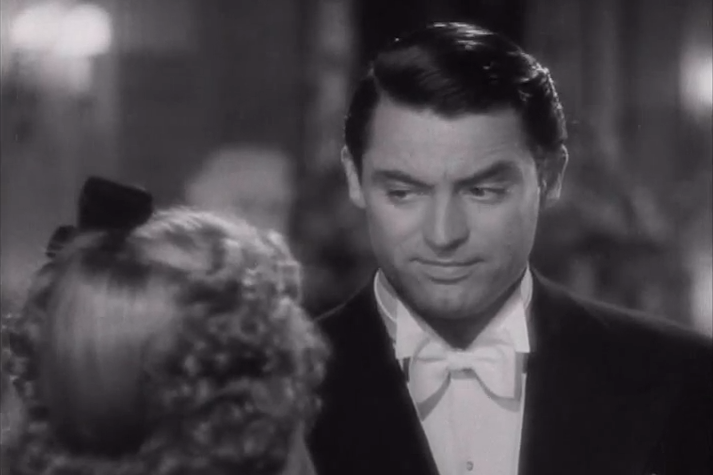
Alternate Best Actor 1937: Cary Grant in The Awful Truth

Cary Grant did not receive an Oscar nomination for portraying Jerry Warriner in The Awful Truth.

Cary Grant never received an Oscar nomination for a comedy role not even for this role in this film which won Best Director, and both his leading lady Irene Dunne, and his supporting foil Ralph Bellamy were nominated, but he was not. Interestingly enough when they teamed up again for the weepie Penny Serenade Cary Grant was nominated and Irene Dunne was not. For whatever reason even when the film was as popular with the academy as this one, they never cared for Grant in a comedic role. They only could accept him as a nominee when he was being serious which certainly is too bad.

Cary Grant here is in prime form as the husband of a soon to be divorced couple. It is not that Jerry and Lucy (Irene Dunne) hate each other that brings them to this point but rather odd behavior from both of them leads both to believe there is infidelity going on. They get the divorce that will take place after a grace period during in such the two seek other romantic interests, and the film is pretty much set up as first Jerry sabotaging Lucy's attempt with the simple southerner Dan (Bellamy), than afterwards Lucy sabotages Jerry's attempt with an heiress.

Grant has quite a bit of fun with his role in his half of the sabotage, as he purposefully moves against her rather simple beau. He does this with simple jabs at him, and rather small gestures that always seem to say that Dan simply is not in the same league as Jerry. Grant is extremely good in just being the being the most cunning one in the room as he constantly does his best to humiliate Lucy, and ruin her chances away from him. His timing is always terrific, and his energetic never falls short of bringing to life the humor of any scene.

Grant though is equally good though in the scenes where he forced to be the one who gets the shorter end of the stick, when Lucy gives him an ample taste of his own medicine. His reaction to her behavior that is quite a bit similar to his earlier behavior to her is excellent as the two of them switch places. His reaction of a sort of bemusement as well as sometimes complete surprise at the extent she goes to prevent him. Grant's reactions are always quite amusing as Jerry is taken aback by Lucy's behavior which is only mirroring his own.

I would say though most important aspect of his performance as well as Dunne is of course there chemistry. In that they both bring to life their relationship in just the right fashion. Firstly their divorce, and their game of ruining each other's romantic affairs are always kept lightly comedic by both actors, never in any way making it seem unpleasant. Equally to their credit though they always manage to put just the right degree of weight in their performance. 

This is not that either actor makes the situation at all serious but the two bring about the idea that the two are a married couple that do actually love each other. Both show their reactions to properly betrayal and neither make it as so they are completely heartbroken, but the two do stress the idea that they do care even behind all the humor. It is rather subtly portrayed by both behind their more comedic reactions, the two have just the right emphasis in the scenes together that the two still have a connection with one another.

This connection is the reason why both of their best moments really come in their silent looks they give to one another. They are both terrific in conveying that the two absolutely do know each other far too well, and when one or the other are pulling a trick the two actually are quite genuine in their response, even though they can be quite funny as well. Grant and Dunne simply make the most about the relationship between the two, and really they are able to make the ending properly a forgone conclusion.

I should say Cary Grant's performance on its own is a charming performance that is very enjoyable to watch, but what does make it special is his chemistry with Irene Dunne's terrific performance. The two together make this film the delight that it is because of how well the play off each other in every one of their scenes. Alone though this is not Cary Grant's very best performance in this genre but it is still an entertaining one that shows his great abilities as a romantic comedy leading man.

Twitter Delicious Facebook Digg Stumbleupon Favorites More